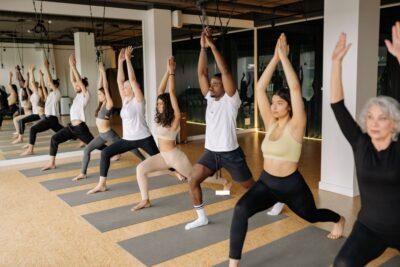
Yoga studios are being reframed as the top choice Third Spaces for communities across the globe. But as classes are still filling up and the market is growing, they’ve got real competition from CrossFit, Hyrox, and Pilates.
But so much has changed recently! High-intensity workouts are being replaced by classes focused on nervous system health, longevity, and recovery. Meanwhile, AI and wearable tech are making the experience more personalized than ever.
Studios that don’t adapt their offerings, environment, and digital tools risk falling behind in a market driven by “Healthspan” and personalized wellness.
We’ve analyzed the surveys and market reports to identify the most important yoga trends for 2026, with a focus on real business impact for studio owners. You’ll see which trends generate quick returns, which work better for established studios, and what new yoga studios should prioritize or avoid.
Is the Yoga Market Still Growing in 2026?
The global yoga market is growing quickly and is expected to nearly double in size between 2025 and 2032. Demand is not slowing down. At the same time, the online and yoga software segment is one of the fastest-growing parts of the market, driven by digital delivery, hybrid access, and personalized experiences.
This growth creates opportunity, but only for studios that evolve with the market instead of staying static.
4 Key Factors Driving the Change for Yoga Studios
#1 Holistic wellness demand
People are no longer coming to yoga just to get flexible; they are coming to get regulated. The modern student is acutely aware that their nervous system is fried. In 2026, yoga is positioning itself not as exercise, but as the primary counter-measure to the high-cortisol lifestyle of the digital age.
#2 Digital transformation
Members expect flexibility and continuity beyond the studio floor. They want to discover classes easily and remain connected. Hybrid classes, on-demand content, apps, and smarter scheduling tools are no longer high-end add-ons. They’re used as personalization features and to expand access.
#3 Broader demographics
Yoga is being adopted by a wider range of people, including younger audiences, older adults, and those using movement for mental health and recovery. This broader appeal supports long-term growth but requires studios to offer adaptable formats and inclusive programming.
#4 Studio Sizing and Experience Design
Many studios are optimizing for smaller, more intentional spaces. Studio sizes between 400 sq. ft. (max 20 clients) and 750 sq. ft. (max 30 clients) help maintain intimacy, strengthen instructor connection, and support community.
Check Out: The Top 10 Barriers Slowing Your Fitness Business Growth. Discover more
Top 8 Yoga Studio Trends for 2026
Yoga Trend #1: Mental Health & Wellness First
In 2026, mental wellness is one of the main reasons people practice yoga. As daily life becomes faster and more digitally saturated, yoga is increasingly valued as a way to slow down, regulate stress, and reset.
Trauma-Aware and Somatic-Informed Practices
Studios are adopting trauma-aware and somatic-informed principles rather than clinical therapy models. Slower pacing, clear cueing, optional variations, and less focus on performance help create a sense of safety and accessibility. This makes yoga more approachable for stressed, burnt-out, or returning practitioners.
Breathwork and Nervous System Regulation
Breathwork has become a standalone offering, with 20–30 minute pranayama or breath-focused sessions growing in popularity. For studios, these classes work well as workshops, digital add-ons, or corporate wellness offerings. They are low-impact, scalable, and aligned with stress-management needs.
Meditation-Integrated and Slow-Living Classes
Meditation is being integrated into regular yoga classes through longer pauses, guided awareness, and extended rest. Rather than novelty, the appeal is creating intentionally quiet, offline experiences that offer relief from constant stimulation and screen time.
Yoga Trend #2: Virtual, Hybrid, and AI-Powered Classes
Think about how to extend the studio experience beyond the room! Many yoga teachers think that virtual yoga cheapens their practice, but what’s trending is hybrid access that fits modern schedules and lifestyles.
On-Demand and Hybrid Models
High-performing yoga studios are combining in-person classes with livestreams, short on-demand practices, guided meditations, and recovery sessions, all accessible through a branded studio app.
What’s changed is not the existence of digital classes, but how integrated they are. Digital access is no longer a separate product. It is part of the core membership experience included in what we call hybrid membership tiers.
AI-Guided Instruction and Smart Feedback
AI in yoga is not replacing teachers. It supports delivery at scale.
You can use AI in your app to guide members through pre-recorded classes, breathwork, or meditation using adaptive pacing, voice guidance, and personalized recommendations based on usage patterns.
Virtual Community and Retention
Community is no longer limited to the physical studio. Members increasingly connect through digital challenges, group goals, and shared schedules.
One way to use tools and AI here is by identifying drop-off risk, triggering personalized check-ins, and grouping members into virtual challenges based on attendance patterns or interests. This is the proper way of using tech to reinforce consistency, connection, and belonging.
Check Out: How to Build a Fitness Community With ABC Glofox
Yoga Trend #3 Tech-Enhanced Practice Environments
As home-based digital fitness becomes more convenient, physical studios are investing in what cannot be replicated at home. In 2026, technology inside the studio is being used to elevate how yoga feels, not to digitize the practice itself.
Immersive and Sensory-Led Studios
High-end yoga studios are designing immersive environments that justify in-person attendance and premium pricing. This includes 360-degree projection mapping, curated lighting, spatial audio, and nature-inspired visuals that support focus and sensory calm.
The goal is to create a fully embodied experience. One that feels restorative, immersive, and intentionally offline. For studios serving experience-driven audiences, this increases perceived value and allows pricing that reflects the environment, not just the class.
Wearables and Biometric-Informed Programming
Wearable technology is moving from passive tracking to practical guidance. Rather than displaying data during class, studios are using wearable insights to inform recommendations, recovery-focused programming, and class selection.
This is especially relevant for hybrid members training at home. Biometric signals like readiness, sleep quality, or stress levels can support personalized suggestions, helping studios offer more adaptive programming without increasing instructor workload.
Yoga Trend #4. Sustainable & Eco-Friendly Studios
Sustainability is a key decision factor for the Gen Z and Millennial demographic.
Green Yoga Gear
The demand for plastic-free practice spaces is rising. Studios are replacing PVC mats with natural rubber or cork alternatives. Accessories like biodegradable cork blocks and organic cotton bolsters are now standard expectations, signaling a brand’s commitment to the environment.
Plastic-Free & Energy-Smart Studios
Beyond props, the Green Studio certification is a powerful marketing tool. This includes eliminating single-use plastics in hydration stations, using VOC-free paints, and installing energy-efficient climate control systems for hot yoga rooms to reduce the carbon footprint.
Yoga Trend #5. Niched-down, Inclusive & Adaptive Yoga
While Vinyasa and Hatha are the two main styles, now bio-specific programming is being added to the traditional way of practicing yoga.
The Most Popular Niched Classes
- Menopause Yoga: A rapidly growing market targeting women 45+. Classes focus on cooling breathwork (Sitali), bone density, and joint health.
- Men’s Mobility: Moving beyond “Broga,” these classes target stiffness from weightlifting and Brazilian Jiu-Jitsu. However, its marketing focuses on injury-proofing and range of motion rather than spiritual flexibility.
- Yoga for Seniors: The Silver Economy is one of the wealthiest demographics and needs support with balance, fall prevention, and cognitive function. Yoga addresses all three, and when combined with social connection, it becomes a highly effective practice for adults aged 65 and over.
- Yoga for Adaptive Needs: Adaptive yoga signals a safe, inclusive space for people with chronic conditions or mobility limitations.
Read More: 9 yoga marketing plan ideas to grow your business
Yoga Trend #6: Community-Oriented Offerings
In a digitally crowded world, yoga studios have a real opportunity to become neighborhood hubs where people feel connected, seen, and part of something ongoing. Community-led programming is not about selling more classes. It is about creating reasons for people to belong.
Local Workshops and Partnerships
Studios can extend their presence beyond the mat by partnering with nearby businesses and communities. This might look like hosting a breathwork session in a local café, meeting a run club after class, or opening the studio for a book club or small social gathering.
These partnerships increase visibility, strengthen local ties, and position the studio as part of the neighborhood fabric, not just another fitness venue.
Mental Wellness Events
The Top 10 Barriers
Slowing Your Fitness
Business Growth
Discover more Mental wellness events do not need to be complex or highly produced. Even small, instructor-led sessions focused on stress, rest, or reflection can attract people who may not attend regular classes.
Over time, these gatherings help position the studio as a place for conversation, learning, and support, not just physical practice.
Social Impact Programming
Community often deepens when it aligns around shared values. Social impact programming can start small, with donation-based classes, local fundraisers, or collaborations with community initiatives.
What matters is consistency. These efforts help studios evolve from service providers into community anchors, where members do not just attend classes; they identify with the space.
Yoga Trend #7: Short-Form & Time-Smart Yoga
One of the biggest shifts in yoga is not a new style, but a new format. Studios and teachers are finding ways to extend yoga beyond the scheduled class and into daily life through short, accessible practices that fit real routines.
Time-smart yoga helps people stay connected to the practice even when they cannot commit to a full session. It also allows studios to support consistency without adding pressure or complexity.
Five-Minute and Express Practices
Short practices are becoming part of how people maintain momentum. Five to fifteen-minute sessions focused on mobility, breath, or recovery work well as digital content or as optional extensions before or after in-studio classes.
These practices support habit-building and help members feel that yoga is something they can return to throughout the day, not just once a week.
Modular and Everyday Yoga Sequences
Yoga is also showing up in more everyday contexts. Modular formats like walking yoga, desk-based movement, or face yoga are emerging as ways to integrate awareness and gentle movement into normal routines.
For teachers, these formats offer creative ways to guide students beyond the mat. For studios, they reinforce yoga as a lifestyle practice that travels with the community, rather than something confined to a single room or time slot.
Pro Tip: As a studio, you are uniquely positioned to create high-quality short-form content, using your space, lighting, and teaching expertise to deliver practices that feel grounded, credible, and visually intentional.
Yoga Trend #8: Strength & Mobility-Based Yoga
Being flexible is no longer the goal. Functional longevity is. People want to move well in daily life, avoid injury and falls, maintain independence, and keep their bodies capable over time.
This is why yoga is increasingly integrating strength and mobility work. The old divide between “yogis” and “lifters” has largely collapsed, replaced by hybrid practitioners and amateur athletes who train across disciplines and expect their yoga practice to support that reality.
Functional Movement Yoga
Classes that blend traditional asana with mobility work, joint preparation, and controlled strength are gaining traction. Approaches inspired by functional range conditioning and movement training are especially appealing to athletes and weightlifters who use yoga to recover from heavy loads, improve joint health, and maintain usable ranges of motion.
Resistance Yoga and Yoga Sculpt
Resistance-based yoga formats bridge the gap for people who want the mental and restorative benefits of yoga alongside strength development. These classes attract fitness-focused members who are not looking to replace their lifting, but to support it with smarter movement and recovery.
Read More: The Ultimate Guide to Opening A Yoga Studio
What to Offer If You’re Just Starting a Studio
Low-Cost Class Formats to Pilot
- Walking Yoga or Run Clubs: Zero facility cost, high community building.
- Mat Pilates or Barre: High perceived value with minimal equipment (just mats and small props).
- Restorative Yoga: diverse appeal with no need for expensive heat/sound systems initially.
Trends to Prioritize First
- Community: Build the “Third Space” vibe (lounge area, coffee) before investing in high-tech projection.
- Strength Integration: Ensure you have a class that uses weights to capture the general fitness market.
- Recovery: If you have space, a Cold Plunge or Sauna is the highest ROI square footage you can own.
Check Out: The Yoga Studio Business Plan: 6 Steps to Creating Your Own
Pro Tip: Avoid overhyped fads. We recommend waiting to invest in niche hardware, such as expensive wall units or VR headsets, until your core membership is stable. It’s always better to focus on the boring basics, good instruction, clean community spaces, and nervous system regulation, which have zero churn risk.
Read More: Baraza Yoga: Thriving with ABC Glofox
Tech, Apps, and Software: What a Modern Yoga Studio Needs
In 2026, the most important use of technology in a yoga studio is your scheduling system and branded app that extend the class beyond the room. Used well, they help members practice more consistently, learn small things between classes, and even remind them of their mid-day affirmations.
This is where you share short breathwork exercises, simple movement cues, and occasional affirmations that help members stay connected to the practice between classes.
Done well, these small moments support consistency without turning yoga into constant consumption.
A modern yoga studio software should include:
- Centralized scheduling and bookings: Members should be able to book, cancel, and waitlist in a few taps. A single scheduling system reduces admin work and prevents double-handling.
- Integrated payments and memberships: Recurring billing, class packs, and hybrid memberships should live in one system. This improves cash flow and creates a smoother member experience.
- A branded mobile app: Members increasingly expect a studio-branded app where they can book classes, manage memberships, receive updates, and stay connected between visits.
- Support for hybrid and on-demand offerings: On-demand libraries, virtual class access, and digital content tied to memberships allow studios to extend beyond the physical space without increasing capacity.
- Automated communication and reminders: Class reminders, schedule changes, and studio updates should be automated. Clear communication improves attendance and reduces drop-off.
- Simple reporting and business insights: Studio owners need visibility into attendance, retention, and revenue trends without relying on spreadsheets or multiple tools.
Rather than stitching together multiple platforms, many studios are moving toward all-in-one yoga studio software designed specifically for boutique studios.
ABC Glofox brings scheduling, memberships, payments, mobile apps, and reporting into one system, helping studios run more efficiently while delivering a more consistent member experience.
The goal is not to make studios feel high-tech. It is to make the experience feel calm, professional, and easy, so instructors can focus on teaching and members can focus on their practice.
FAQs
Is the yoga industry still growing?
Yes, the global yoga market is projected to reach approximately $258 billion by 2033, with a strong growth trajectory starting in 2026.
What are the must-have studio features?
Modern yoga studios need high-quality air purification or ventilation, durable non-toxic flooring, and dimmable lighting to support comfort and focus. Sound control and temperature regulation are also important, especially for heated or recovery-based classes.
How do I handle booking and tech?
Successful studios use agile management software that allows students to book in three clicks or fewer and integrates hybrid online/in-studio memberships. Read more here.
What styles are most popular?
While Vinyasa and Hatha remain top drivers, there is surging demand for Restorative/Yin (for recovery), HIIT/Hot Yoga (for fitness), and niche formats like Aerial or Prenatal yoga.
Do I need a special certification?
For teachers, standards are rising. In many regions, certifications aligned with the Yoga Certification Board (YCB) are becoming the professional benchmark for safety and authenticity.
Is yoga just for the flexible?
No. 2026 trends emphasize inclusivity and accessibility, with adaptive yoga for seniors, people with disabilities, and Yoga for Men (Broga) focusing on functional mobility. Yoga improves strength, balance, mobility, and nervous system regulation, supporting long-term health and everyday movement for all ages and abilities.
What is the “Yoga Capsule” trend?
Yoga Capsule refers to short sessions (often <15 mins) that focus on meditation or specific stretches, designed for busy students and office workers.
Are corporate yoga contracts viable?
Yes, companies are increasingly integrating yoga into employee wellness programs, offering significant B2B contract opportunities for local studios.
So, what’s next?
Now that you’re up on the latest trends in yoga, it’s time to price your classes and grow your business!
ABC Glofox has you covered. Our powerful software helps yoga studios like yours manage memberships, streamline scheduling, and process payments, all in one user-friendly location.
Ready to make your yoga business dreams a reality? Request your free demo today!